



Restaurant technology leaders are no strangers to innovation. Every year brings new platforms, new capabilities, and new opportunities to improve operations. But as technology evolves faster than ever—particularly with the rise of artificial intelligence—the conversation is shifting.
It’s no longer simply about what technology to implement. It’s about how organizations prepare for it.
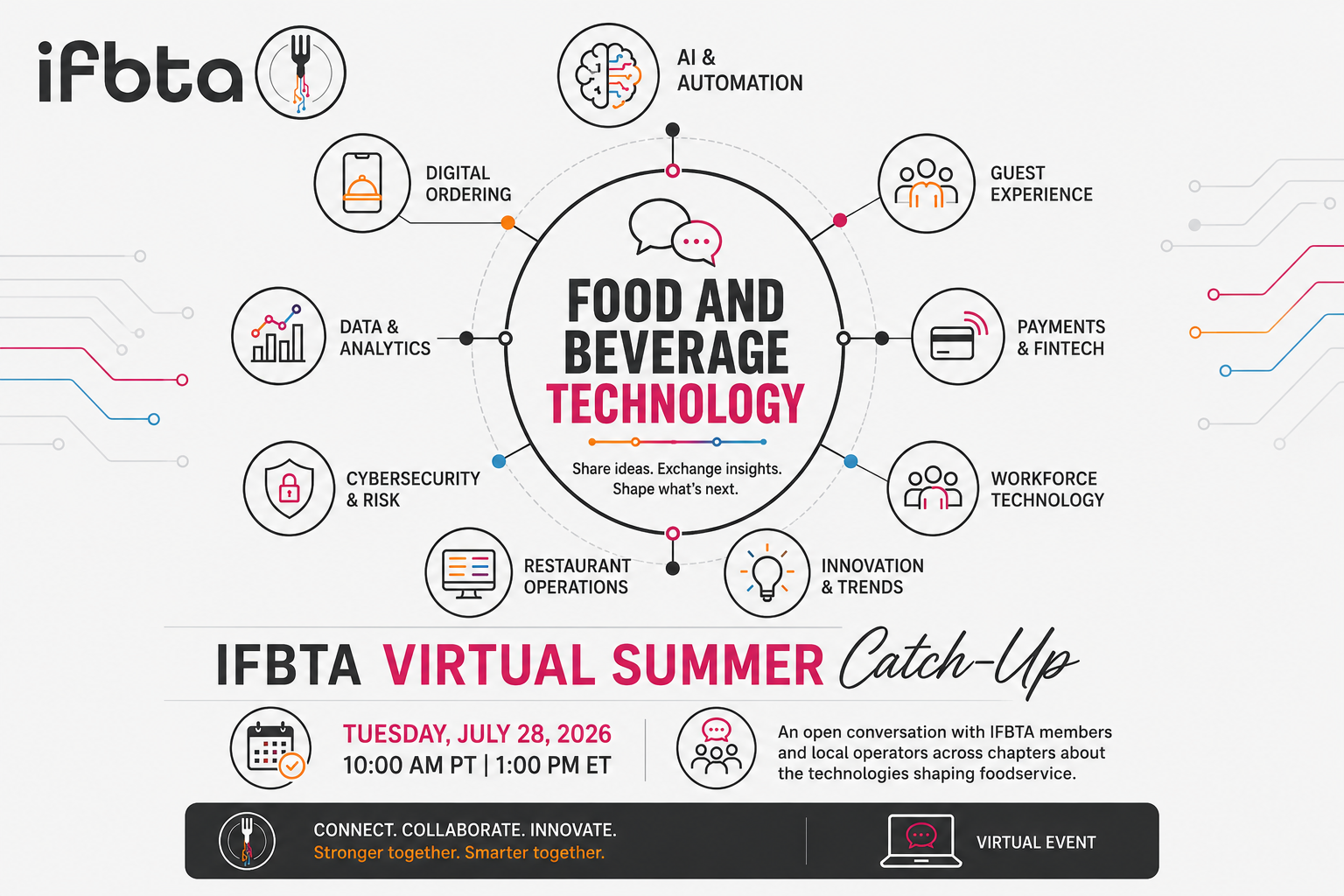
During a recent IFBTA Virtual Catch-Up, members from across the food and beverage technology community shared practical insights on workforce management, cybersecurity, AI governance, and digital transformation. While the topics varied, one theme emerged consistently: successful technology adoption depends less on the technology itself and more on the operational foundation supporting it.
Start with the process—not the platform.
Many organizations are evaluating new systems to improve scheduling, payroll, employee management, and operations. But replacing software doesn’t automatically solve inefficient workflows. Members agreed that technology should simplify existing processes, eliminate manual work, and integrate naturally into the broader business ecosystem.
One attendee shared that after evaluating a replacement system, their team discovered they had significantly underutilized their existing platform.
“We thought it wasn’t as capable as we needed it to be… then we saw the demo and realized we were paying for a lot of things we didn’t realize we had.”
The takeaway was simple: before searching for a new solution, make sure you’re maximizing the one you already have.
Governance has become just as important as innovation.
Artificial intelligence generated the most active discussion of the meeting. Interestingly, members weren’t debating whether AI belongs in the workplace—they were discussing how to implement it responsibly.
Organizations are now developing policies around approved AI tools, enterprise licensing, employee education, and acceptable use long before AI becomes deeply embedded in everyday workflows.
One participant described the challenge this way:
“We’re starting to understand what the current capabilities are and what the future capabilities are. How do we proactively implement policies to manage AI usage and protect the organization?”
Another member summarized the conversation perfectly:
“It all starts with policies, procedures, and enforcement.”
Rather than slowing innovation, members viewed governance as the framework that enables organizations to adopt AI with confidence.
Security can’t be an afterthought.
As businesses connect more applications, devices, and employees, identity management continues to become more complex—particularly for franchise organizations.
The discussion focused on authentication, user provisioning, access management, and ensuring employees only have access to the systems they need.
One member explained how their organization approaches identity management:
“We monitor active employees, manage permissions through job roles, and proactively address inactive accounts because licensing and security both depend on it.”
The broader takeaway was that security is no longer just an IT responsibility—it’s becoming an operational strategy that supports every digital initiative.
Technology should reduce complexity—not create it.
As restaurant technology stacks continue to grow, integration has become just as important as functionality. Throughout the discussion, members emphasized that every new tool should reduce friction rather than introduce another disconnected workflow.
One participant offered an analogy that resonated with the group:
“Look at a mechanic’s toolbox. There are drawers full of tools, but they only use the ones they actually need. We felt the same thing applied to our technology.”
The message was clear: adding more technology isn’t always progress. Sometimes the greatest value comes from simplifying what already exists.
Education remains one of the best investments.
Perhaps the strongest takeaway wasn’t about software at all—it was about people. As AI becomes more accessible, organizations are realizing that technology alone isn’t enough. Employees need training to understand both its capabilities and its risks.
One member described how their organization approached adoption:
“We had to do a session for everyone in the company about AI—what it can do, what kind of damage it can cause, and the policies around using it.”
Another added a reminder that applies well beyond AI:
“Trust, but verify. If you give someone the ability to make a mistake, at some point they might. Prevention is the best way to go.”
Education, governance, and thoughtful implementation ultimately provide organizations with the confidence to innovate responsibly.
Looking Ahead
The food and beverage industry has always embraced innovation, but today’s conversations suggest a shift in priorities. Technology leaders are no longer measuring success solely by the newest capabilities—they’re evaluating how well those capabilities fit into secure, scalable, and well-governed operations.
Join IFBTA and get notified about upcoming events, news, etc
Share this